Fitness
How to calculate sweat rate for training
Use pre/post exercise weight, fluid and urine to estimate hourly sweat loss and build a safer hydration plan.
No miracle diets, no 5 a.m. rules. Just clear, evidence-informed guides on food, movement, your cycle, sleep and stress — written the way we build the app: calm, practical, and honest about what we don't know.
Use pre/post exercise weight, fluid and urine to estimate hourly sweat loss and build a safer hydration plan.
Use walk-run sessions, easy effort and gradual progression to prepare for a first 5K while managing soreness and recovery.
Recognize accumulated fatigue, choose a deload method and return to progressive training without losing fitness.
Use rating of perceived exertion and repetitions in reserve to choose loads, progress safely and interpret hard sets.
Compare common body-fat methods, understand their error and choose the best way to track a meaningful trend.
Separate water, glycogen, digestion and menstrual-cycle changes from the slower body-fat trend.
Find the anatomical landmark, control tape tension and breathing, and build a waist trend that is actually comparable.
Set a measured muscle-gain surplus, choose a realistic rate of gain and adjust using weight, waist and performance trends.
Turn a daily protein target into realistic meals, understand the limits of the “30 gram” rule and plan around training.
Learn why calories per gram affect fullness, how to build higher-volume meals and where “healthy” portions can still become energy dense.
Understand METs, gross versus net activity calories, why watches disagree and how to use exercise-energy estimates without double-counting.

Build a practical high-fibre day with legumes, whole grains, fruit, vegetables, nuts and seeds—without relying on one giant salad.
Prepare, pace and repeat the Cooper test safely; calculate estimated VO₂ max and understand why a field result differs from a lab test.
Learn what FFMI measures, how body-fat error affects it, why adjusted FFMI exists and why one cutoff cannot judge an individual.
Metabolic damage, starvation mode, meal frequency, sweat and detox claims—what each gets wrong and what matters instead.
Learn how hunger, appetite, habit and emotion overlap—and use a non-judgmental check before deciding what to eat.
Why stress changes appetite, how restriction can intensify the cycle and practical ways to create a pause without shame.
How morning light, wake time, evening light, meals and exercise shape sleep timing—and how to shift gradually.

How repeated short sleep accumulates, what weekend catch-up can and cannot do, and a realistic recovery strategy.
Choose pre-workout carbohydrate, protein, fluid and meal size based on timing, session demands and stomach comfort.
How meal timing affects hunger, training and sleep—and why total intake and consistency usually matter more.

Sodium, potassium and fluid balance explained—when ordinary meals are enough and when long, sweaty exercise changes the plan.

Why fat is essential, how unsaturated and saturated sources differ, and why healthy fats still need portion awareness.
Understand sugars, starches, fibre, glycogen and why food quality and total intake matter more than calling carbs good or bad.
How to use legumes, soy, grains, nuts and seeds to reach protein needs without obsessing over complete proteins at every meal.
Practical ways to reach 25–35 grams at breakfast using eggs, yoghurt, dairy, legumes and ordinary foods.

Build snacks with protein, fibre and the right portion so they bridge meals instead of becoming a second lunch.
Use plate structure, hand portions and occasional calibration to build satisfying meals without permanent food-scale dependence.
A fast method for comparing serving size, calories, protein, fibre, saturated fat, sugar and sodium without marketing noise.
What HRV measures, why your personal baseline matters and how to avoid letting one recovery score run your training.
How to measure resting heart rate, what fitness trends can show and which sudden changes deserve attention.
How walking supports a calorie deficit, how much to add, why pace matters less than consistency and how to avoid compensation.
What Zone 2 means, how to find it with heart rate and the talk test, and how to fit easy aerobic work into a week.
How to progress training through reps, load, range, technique and volume without turning every session into a test.
What creatine does, who benefits, typical dosing, water-weight change, safety and why monohydrate is the default form.
A practical guide to training volume, progressive overload, protein, calorie surplus and recovery for sustainable muscle gain.
Who can realistically build muscle while losing fat, how to set calories and protein, and which progress markers matter.
Estimate maintenance calories, run a two-week calibration and tell real energy balance from day-to-day scale noise.
What BMR measures, how equations estimate it, why smart watches disagree and how to use the number without treating it as a calorie floor.
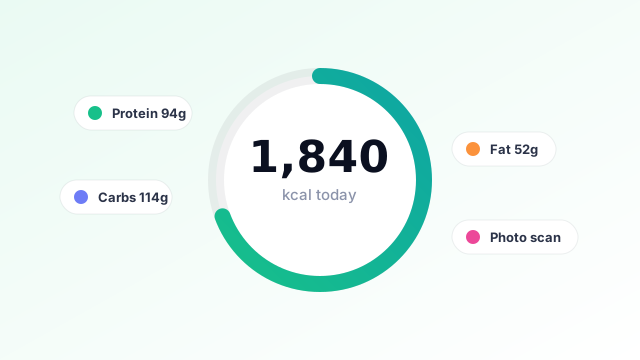
Where food logs commonly lose accuracy, and five habits that make tracking consistent enough to be useful.
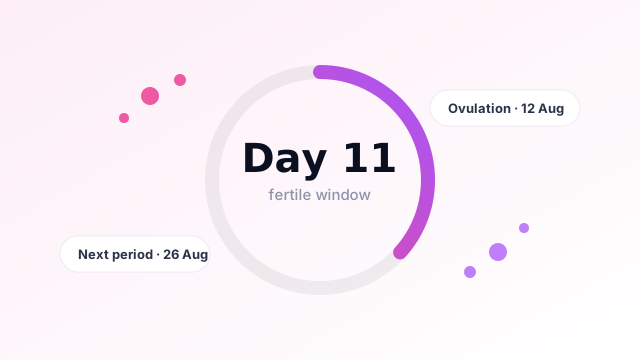
What actually changes across follicular, ovulation, luteal and menstruation — and how to plan food, training and rest around it.
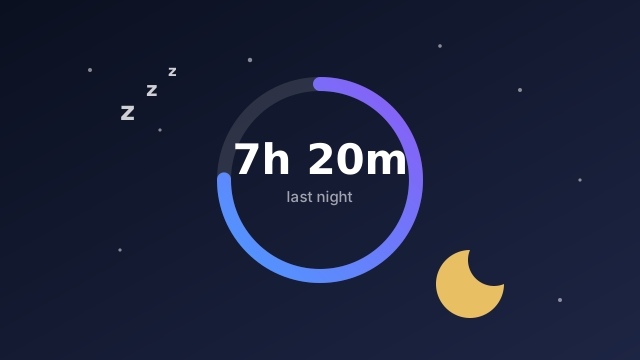
The honest answer to the 8-hour question, why sleep debt compounds, and what to fix first.
Grams per kilo, not percentages — and why how you spread protein across the day matters more than the exact daily total.
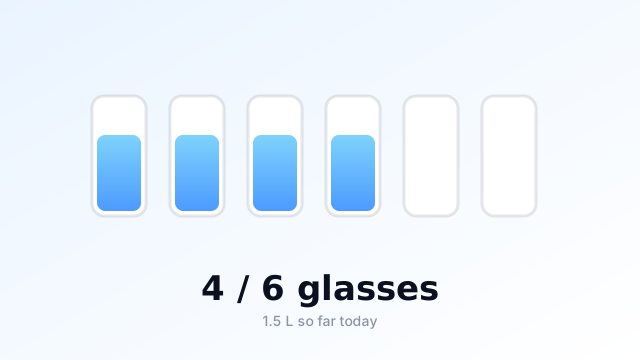
Where the eight-glasses rule came from, what really sets your needs, and the one check that beats every formula.
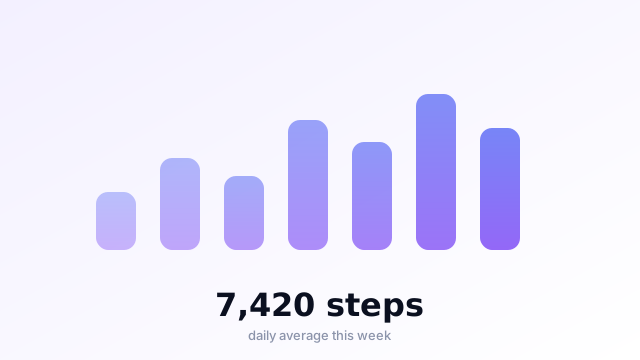
The number came from a 1960s pedometer name. What the research since then says about how many steps actually matter.
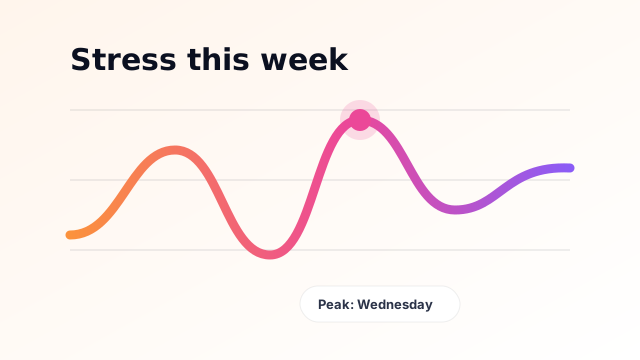
Cortisol is not a villain. What stress does in the body, when it turns costly, and the interventions with real evidence.
Almost every plateau is one of four things — and only one of them is physiology. How to find yours.
Two sessions a week, six movements, one rule for adding weight. Built to be repeatable, not impressive.
Breakfast does not fire up your metabolism and skipping it does not ruin your day. What actually decides it.
Which premenstrual symptoms are typical, what has evidence behind it, and when to see a doctor.
Daily limits, how long caffeine really lasts, and why the afternoon coffee is quietly costing you sleep.
Body weight answers one narrow question and hides several better ones. Seven measures worth tracking instead.
A nightcap helps you fall asleep and then dismantles the second half of the night. What actually happens.
Energy needs by trimester, the nutrients that matter most, and what to avoid — with your care team in charge.
Seven identical boxes is a countdown to takeaway. Prep components, not meals — and 90 minutes covers the week.
Four causes explain almost all evening snacking, and none of them is weak willpower. Each has a different fix.
Without weights you cannot add kilos — so use the four levers that make bodyweight work harder.
Most adults get half the fibre they need. The two types, how to add 10 g a day painlessly, and what it does to appetite.
Two kilos overnight is never fat. Salt, carbs, training and your cycle all move body water in predictable ways.
Do not run your normal routine on the road. Pick the two or three things that carry the most and let the rest go.
Why a longer exhale calms you down, three techniques worth knowing, and how long each needs to work.
Screen time is a weak measure. What drains you is fragmented attention — switch less rather than scroll less.
Tiredness improves with a weekend; burnout does not. The three components and what actually helps.
Twenty tips is why sleep advice fails. Five changes carry almost all the effect — here they are, in order.
You cannot delete the conflict between night shifts and your body clock — but four specific things stop making it worse.
Where ordinary cycle variation ends, what commonly causes irregularity, and the signs that mean seeing a doctor.
They do different jobs. What each gives you, and how to fit both into two, three or four days a week.
Stretching does not prevent injury or cure soreness. What it does do, and a ten-minute routine that earns its place.
Ice baths get the attention; sleep, food and sensible load do the work. The hierarchy, in order.
Six small meals to 'stoke the metabolism' did not survive testing. What actually decides your best pattern.
Most salt does not come from the shaker. Where it hides, and how to cut back without bland food.
Liquid calories are the easiest to remove and hardest to notice. Juice, diet drinks, and what actually works.
Restaurant meals are bigger and oilier than they look. Four decisions made before you arrive.
Losing weight is the short project. Why regain is so common, and the habits that separate people who hold it.
The scale measures one thing badly and several not at all. How to weigh so the number means something.
Cycles change years before periods stop. What perimenopause does to sleep, mood, weight and bone.
Eating, moving and sleeping after birth — with realistic expectations and clear signs for when to call a doctor.
What you eat this week was mostly decided in the supermarket. A list method and the three labels worth reading.