Cortisol has become the internet's favourite villain. Supplements promise to lower it, posts blame it for stubborn belly fat, and somewhere along the way a hormone you cannot live without turned into a toxin to be flushed out.
The real picture is more useful — and more actionable.
What cortisol actually does
Cortisol follows a daily rhythm. It rises sharply in the first 30–45 minutes after you wake, which is part of what gets you out of bed, then falls across the day to a low point around the middle of the night. Along the way it keeps blood sugar available, modulates inflammation and helps you respond to demands.
A short spike is not damage. It is the system working. The cost appears when the response never switches off — when the body stays mobilised for months because the demand never lets up.
Acute stress vs chronic stress
| Acute | Chronic | |
|---|---|---|
| Duration | Minutes to hours | Weeks to years |
| Effect | Focus, energy, performance | Poor sleep, appetite changes, low mood, illness |
| Recovery | Returns to baseline quickly | Baseline itself drifts |
| What helps | Nothing — it is doing its job | Reducing the load, restoring sleep, movement, support |
This distinction matters because most stress advice tries to eliminate the acute response, which is neither possible nor desirable. The target is the chronic pattern.
When it is not a habit problem
Persistent low mood, anxiety that interferes with daily life, panic attacks, or exhaustion lasting weeks deserve medical assessment. No breathing exercise substitutes for treatment, and effective help exists.
What has decent evidence
- Sleep. The most reliable lever. Short sleep raises next-day stress reactivity, and stress then damages sleep — the loop runs both ways, which is why fixing sleep often improves stress more than any dedicated stress technique.
- Regular movement. Aerobic activity has consistent, moderate effects on anxiety and mood. Notably, this works at gentle intensities; you do not need to punish yourself.
- Slow breathing. Extending the exhale for a few minutes measurably shifts the nervous system towards a calmer state. Two minutes is a real dose.
- Mindfulness and CBT-based approaches. Structured programmes show small-to-moderate benefits for stress and anxiety across many trials.
- Social contact. Consistently one of the strongest predictors of stress resilience, and the first thing people drop when stressed.
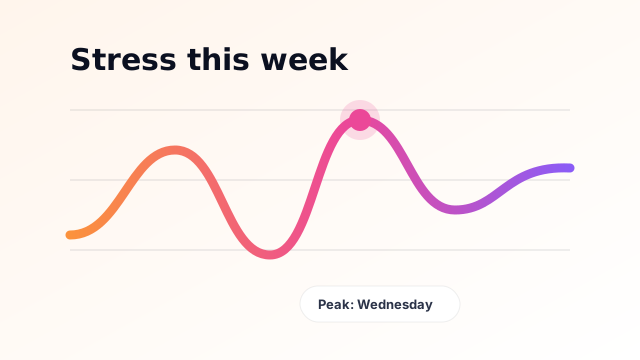
Patterns like this one are the point of tracking. A single stressful Wednesday means nothing; a Wednesday that repeats for six weeks alongside short sleep is a structural problem you can actually address.
What does not hold up
- "Cortisol detox" supplements. No credible evidence of meaningful benefit in healthy people.
- Cortisol as the cause of belly fat. The relationship is real but weak and indirect; energy balance, sleep and alcohol explain far more.
- Home cortisol test kits. Levels swing hour to hour. A single reading tells you almost nothing without clinical context.
- "Just relax." Stress is usually a load problem, not an attitude problem. If the load is real, technique alone will not fix it.

Kiva's two minutes
Breathe in for four, out for six, for two minutes. It is not a cure and it is not meant to be — it is a reliable way to interrupt the spiral long enough to think.
Building a week that absorbs stress
Rather than adding a stress routine on top of an overloaded week, remove friction from the week itself:
- Protect one consistent wake time. It anchors both sleep and mood.
- Put movement where it already fits — the commute, lunch, after dinner.
- Keep one evening a week genuinely unscheduled.
- Log stress and sleep together for three weeks. The pattern almost always shows a driver you can change.
Frequently asked questions
Is cortisol bad for you?
No. Cortisol is essential: it helps wake you up, regulates blood sugar and supports the immune response. Problems come from chronically elevated or badly timed patterns, not from the hormone existing.
Do cortisol supplements or detoxes work?
There is no good evidence that supplements 'lower cortisol' in a way that improves health outcomes in healthy people. Sleep, movement, breathing practices and reducing the actual stressor have far better support.
How do I know if my stress is a medical problem?
If low mood, anxiety or exhaustion last more than two weeks, interfere with work or relationships, or come with panic, chest pain or thoughts of self-harm, that is a reason to see a doctor rather than a habit to optimise.
Keep reading
How much sleep do you actually need?
The honest answer to the 8-hour question, why sleep debt compounds, and what to fix first.
Is 10,000 steps a day a real target?
The number came from a 1960s pedometer name. What the research since then says about how many steps actually matter.